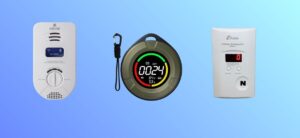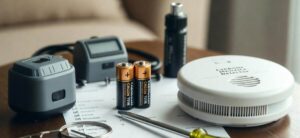

Carbon monoxide (CO) is a deadly gas that’s completely invisible—colorless, odorless, and tasteless—earning it the nickname “silent killer.” Every year, it causes hundreds of deaths and tens of thousands of emergency room visits from everyday sources like gas furnaces, water heaters, fireplaces, stoves, generators, and even cars left running in attached garages. CO risk isn’t limited to gas appliances; it also comes from burning wood, charcoal, oil, and propane in fireplaces, space heaters, and portable grills.
A reliable CO detector senses rising levels early (before they hit dangerous 70+ PPM), giving you and your family precious time to evacuate and call for help. This expanded, neutral buying guide explains everything clearly—types, key features, placement rules, quantity needed, maintenance, and common pitfalls—so you can confidently choose protection that fits your home.
Table of Contents
Types of Carbon Monoxide Detectors
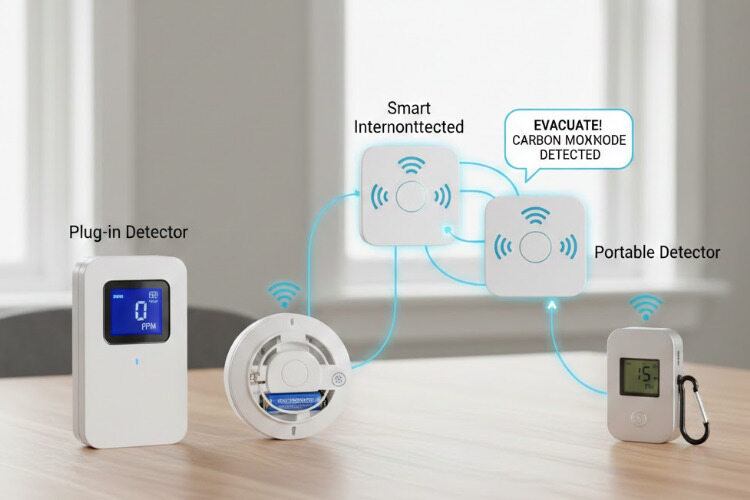
Detectors come in different styles to match various home setups and lifestyles. Understanding the main types helps you select the best fit.
Plug-in detectors connect directly to wall outlets and usually include battery backup for power outages. They are simple to install with no wiring and suit areas with easy outlet access, such as living rooms or hallways.
Battery-powered detectors operate completely wirelessly, using either replaceable batteries or sealed lithium batteries that last the device’s full lifespan (often 10 years). This allows complete placement flexibility, making them ideal for locations without outlets, like bedrooms, basements, or high ceilings.
Interconnected detectors wirelessly link multiple units across your home—if one detects CO, all alarms sound together for faster awareness. Some advanced versions include voice announcements or smart features. They are particularly useful in larger or multi-story homes.
Portable detectors are compact and lightweight, designed for temporary or on-the-go use, such as in vehicles, hotels, or recreational spaces. They often provide higher sensitivity for low-level detection but are not intended as primary permanent home protection.
Many detectors also combine CO sensing with smoke detection for dual coverage.
Key Features to Consider
Focus on features that directly affect safety, reliability, and ease of use. A digital display shows exact CO levels in parts per million (PPM) in real time and often includes peak memory to record the highest reading. This helps identify slow leaks early, unlike basic models that only alarm at high danger levels.
For maximum reliability, look for devices utilizing electrochemical sensors, which are the industry standard for precision and long-term stability.
Power reliability is crucial—look for backup batteries in plug-in models or sealed long-life batteries to avoid frequent changes. Alarm volume should be at least 85 dB to wake sleepers, with extras like voice alerts adding clarity.
Interconnectivity ensures whole-home alerting. Always verify certifications (such as UL or ETL listing) for proven accuracy and compliance with safety standards. Additional useful options include backlit screens for night visibility or low-level sensitivity.
Placement and Installation Guidelines
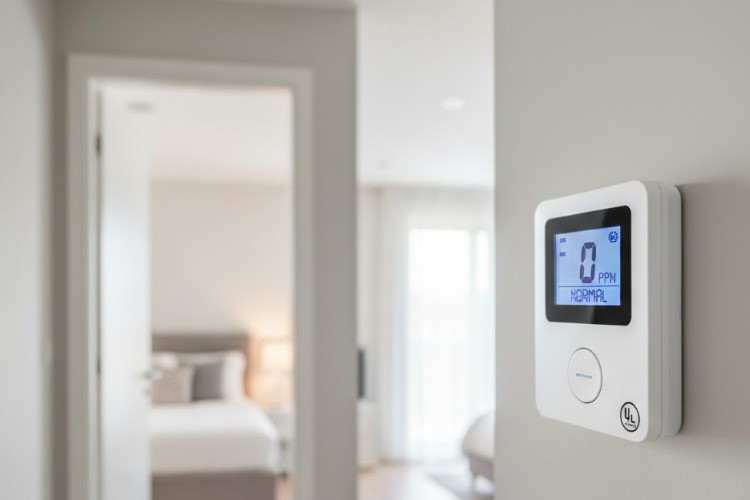
Proper placement maximizes effectiveness—CO spreads evenly but can accumulate near sources.
Install detectors on every level of your home, including the basement. Place at least one outside each separate sleeping area (e.g., hallways near bedrooms) to ensure alarms are heard during sleep. Consider extras near potential sources like attached garages or fuel-burning appliances.
Mount at any height (eye level is convenient for reading displays if present), on walls or ceilings. Avoid kitchens, bathrooms, garages, or areas near windows, doors, vents, or fans—these can trigger false alarms from humidity, cooking fumes, or drafts. Always follow manufacturer instructions and local building codes.
How Many Detectors Do You Need?
Coverage depends on your home’s layout, but guidelines provide a solid starting point. The standard recommendation: One per level (including basement) plus one outside each sleeping area. For a typical 2-3 story single-family home with upstairs bedrooms, this often means 3–5 units total. Larger homes, attached garages, or multiple fuel appliances may require more. Local regulations frequently specify minimums, especially for new construction or rentals—check your area’s requirements.
Maintenance and Longevity
Regular care keeps detectors functioning properly. Test each unit monthly using the built-in test button. Gently vacuum the exterior to clear dust. Replace batteries promptly if the device chirps low-battery warnings (sealed models need none). Most importantly, replace the entire detector at its end-of-life (usually 7–10 years; check the printed date on the unit)—the sensor gradually loses sensitivity over time, even if tests pass.
If an alarm sounds, immediately move to fresh air—outdoors or by an open window—and do not re-enter the premises until emergency responders declare it safe.
Common Pitfalls to Avoid
Many reduce their protection unintentionally with these errors. Assuming smoke detectors also cover CO—they do not. Treating portable units as full-time home protection (insufficient coverage). Ignoring end-of-life signals or expiration dates. Placing units in kitchens/garages (frequent false alarms) or too far from sleeping areas (delayed alerts).
Final Advice
Protecting your home from carbon monoxide is one of the simplest and most important steps you can take for family safety—and it’s more affordable than most people realize. Focus on detectors with proven electrochemical sensors, reliable power (whether plug-in with backup or sealed long-life batteries), and clear alerts like digital displays for early warning. Ensure full coverage across every level and sleeping area, place them correctly, test monthly, and replace at expiration. With the right setup and basic maintenance, you’ll have peace of mind knowing you’re guarded against this invisible danger. Take action today—your family’s safety is worth it.
FAQs
How many carbon monoxide detectors do I need in my home?
The standard rule is to install at least one detector on every level, including the basement. Most importantly, you must place one in the hallway outside every sleeping area to ensure the alarm wakes you up. For larger homes or those with attached garages, additional units near the garage and in distant bedroom wings are highly recommended.
Where should I place carbon monoxide detectors in my house?
Place detectors on the wall at eye level (about 5 feet up) or on the ceiling. Keep them at least 15–20 feet away from fuel-burning appliances (stoves, furnaces) and humid areas (bathrooms) to avoid false alarms. Avoid placing them near windows, vents, or fans, as drafts can interfere with the sensor’s ability to detect gas.
How long do carbon monoxide detectors last?
Most CO detectors have a lifespan of 5 to 10 years. The sensor loses sensitivity over time, so you must replace the entire unit once it expires. Check the manufacture date on the back of the device; if it’s over 7 years old, it’s time for a new one. Modern units will usually emit a specific “end-of-life” chirp when they need replacement.
What’s the difference between plug-in and battery-powered detectors?
Plug-in models are easy to install in wall outlets and usually include a battery backup for power outages. They are best for areas with easy outlet access. Battery-powered models offer total flexibility—you can mount them anywhere on walls or ceilings without needing a nearby socket. Many now come with 10-year sealed batteries, which require zero maintenance until the unit expires.
What should I do if the alarm goes off?
Immediately move everyone to fresh air outdoors. Do not stop to open windows or turn off appliances. Once outside, call 911 or the fire department. Do not re-enter the home until emergency responders have used professional equipment to clear the house and officially declared it safe. If anyone feels dizzy or nauseous, seek medical help immediately.

Welcome to Homenias, I’m Jaman M, and I’m here to help you discover the best home products. With years of experience, they offer genuine reviews and helpful guides. Their mission is to make your choices easier. It’s organizing your space or finding creative solutions. Explore how the right products can enhance your everyday life. Don’t miss out on finding the best home products to raise your living experience.